
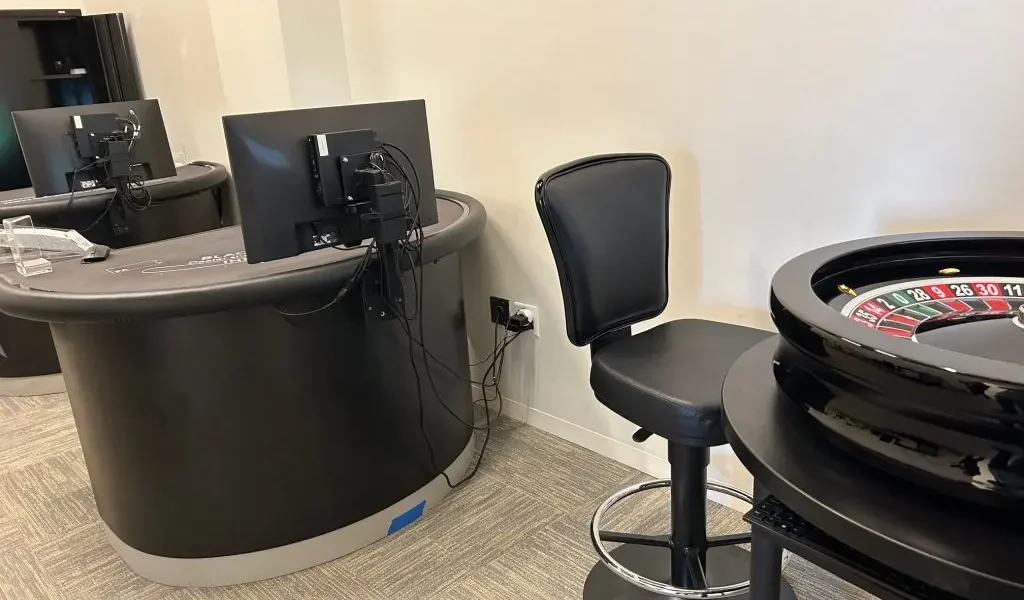

You click “join table,” and suddenly you’re there. A real dealer smiles, cards shuffle with that familiar whisper, and the roulette wheel spins with a satisfying clatter. It feels immediate, authentic. But have you ever wondered what it takes to make that magic happen? Honestly, it’s a fascinating ballet of cutting-edge tech and human nuance happening just off your screen.
Let’s pull back the curtain. The seamless experience you enjoy is anything but simple behind the scenes. It’s a tightly coordinated operation where a single dropped frame or a dealer’s missed cue can break the spell. Here’s the deal on how it all comes together.
The Nerve Center: Studio Technology Stack
Think of the studio as a miniature television broadcast station, but one where viewers can interact in real-time. The tech setup is, well, intense.
Cameras, Angles, and Optical Character Recognition (OCR)
This is the eyes of the operation. Multiple high-definition cameras capture every detail: a wide shot of the table, a close-up on the dealer’s hands, a dedicated chip cam, and a focus on the roulette wheel or cards. But the real star is often the OCR camera.
This specialized tech doesn’t just film; it reads. It scans the gaming table, recognizes card values or the roulette ball’s final position, and instantly translates that physical data into digital information for the software. It’s the critical bridge between the physical game and your digital bet slip.
Low-Latency Streaming: The Need for Speed
Latency is the enemy. A delay of even a few seconds can make the game feel fake, or worse, cause players to miss betting windows. Studios use specialized streaming servers and protocols to shave milliseconds off the transmission.
It’s a constant battle against physics—data has to travel from the studio, through encoders, across the internet, to your device. Top providers invest heavily in global Content Delivery Networks (CDNs) to ensure that whether you’re in Tokyo or Toronto, the action feels instant.
The Human Element: More Than Just a Pretty Smile
Sure, the technology is cool. But without the people, it’s just a sterile video feed. The human operations are where the soul of the game lives.
The Dealers: Hosts, Entertainers, and Precision Experts
These aren’t just croupiers. They are broadcast professionals. They manage the game flow, interact with players by name, maintain impeccable pace, and project an engaging, trustworthy presence—all while following strict procedural rules. Talk about multitasking.
They train for weeks, not just on game rules, but on camera presence, audio clarity, and handling the occasional technical glitch without breaking stride. Their ability to “work the room” for a virtual audience is a unique skill.
The Pit Boss & Control Room
Out of shot, there’s always a team overseeing everything. A floor manager or pit boss monitors game integrity and dealer performance. Meanwhile, in a separate control room, a director and technical crew watch a wall of screens.
They switch camera angles, monitor audio levels, and ensure the data from the OCR is syncing perfectly with the live feed. They’re the invisible conductors of this symphony.
When Tech and Humans Collide: The Daily Dance
The real magic—and the biggest challenge—is the integration. How do these two halves function as one seamless whole?
Consider the dealer’s interface. They have a small monitor, often called a Player Interaction Display, showing player usernames, chat messages, and betting status. They must acknowledge chats, announce bets closing, and run the game, all while making it look natural. It’s a subtle dance of glancing at the screen and engaging with the camera.
Then there’s redundancy. What if the main OCR fails? Studios have backup systems, sometimes a second OCR unit or a dedicated person manually inputting data as a fail-safe. The show must literally go on.
Trends Shaping the Backstage
This field isn’t static. It’s evolving rapidly to increase immersion and solve operational pain points.
Extended Reality (XR) Studios: Some are now using green screens and augmented reality graphics to place dealers in fantastical environments—a virtual casino floor, a futuristic lounge—which adds production value without building expensive physical sets.
AI and Data Analytics: Behind the scenes, AI is used to monitor stream quality proactively, flag any irregular gameplay patterns for security, and even provide dealers with analytics on their performance, like talking speed or game pace.
Localization: It’s not just language translation. To truly connect with global markets, studios in different regions hire dealers who understand cultural nuances, holidays, and communication styles. A studio catering to Nordic players might have a different vibe than one for Latin American audiences. That human touch, you know?
The Unseen Challenge: Creating Trust
Ultimately, every cable, every camera angle, every dealer’s smile serves one master: building trust. The player needs to believe the game is fair, live, and secure. The technology provides the verifiable transparency (you see every card dealt, every spin). The human provides the relatable, accountable face.
It’s a powerful combination. One reassures your logical brain; the other connects with your social brain. And when it works, you forget about the studios, the OCR, the latency. You’re just at the table, in the moment.
So next time you join a live blackjack table, take a second to appreciate the intricate, humming ecosystem behind your dealer’s welcoming nod. It’s a world where engineering precision meets human warmth—a delicate balance, performed perfectly, just for you.


