
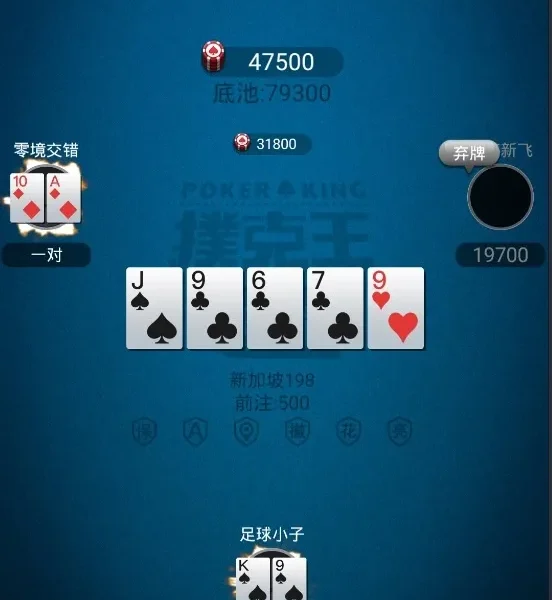

You’ve been grinding No-Limit Hold’em tournaments for years. You know the flow — the slow bleed of blinds, the ICM pressure, the careful hand selection. Then someone introduces you to Short Deck poker. Everything you thought you knew? It flips. Honestly, it’s like driving a manual car your whole life and suddenly being handed a go-kart. Faster, wilder, and way more prone to spinouts. But here’s the thing: with the right tournament strategy adjustments, Short Deck can be your edge. Let’s break it down.
Wait, What Exactly is Short Deck Poker?
First, a quick refresher. Short Deck (also called Six-Plus Hold’em) removes all cards from 2 through 5. That leaves a 36-card deck. Aces are still high, but now a flush beats a full house. And the hand rankings shift — a set becomes more common than a straight draw. The game plays faster, with more action per hand. For tournament players, that changes everything.
In a normal Hold’em tournament, you might wait for premium hands. In Short Deck? You’ll be playing more hands, and you’ll need to rethink your ranges. Let’s dive into the key adaptations.
1. Hand Values Are Totally Different — Embrace the Chaos
In standard Hold’em, pocket aces are a monster. In Short Deck, they’re still strong — but less dominant. Why? Because there are fewer cards, so opponents hit pairs and draws more often. Aces win about 77% of the time preflop in Short Deck, compared to 85% in full-deck Hold’em. That’s a real drop.
So, what do you do? You start valuing suited connectors and high cards differently. Hands like K-Q suited become gold. Why? Because they can flop big draws — and in Short Deck, a flush draw has more equity since there are fewer cards to dodge. In tournaments, this means you can open up your raising range from late position, especially when stacks are deep.
Here’s a quick table to compare preflop hand strength (heads-up, all-in equity):
| Hand | Full Deck Equity | Short Deck Equity |
|---|---|---|
| A-A | 85% | 77% |
| K-K | 82% | 70% |
| A-K suited | 67% | 58% |
| J-T suited | 54% | 52% |
Notice how the gap narrows. That means you can’t just sit back and wait for premiums. You’ve got to mix in more speculative hands — especially in tournaments where chip preservation matters less early on.
2. Blind Levels and Stack Sizes — The Rhythm Is Faster
Tournament structures for Short Deck often have shorter blind levels. Like, 10-15 minutes instead of 20-30. That’s a huge shift. You don’t have the luxury of waiting for perfect spots. You’ve got to accumulate chips faster, or you’ll blind out.
Here’s the deal: in a standard Hold’em tournament, a 30-big-blind stack feels comfortable. In Short Deck? That’s borderline desperate. Because hands play bigger and pots grow faster, you want at least 40-50 big blinds to feel safe. If you dip below 25 BB, you’re in push-or-fold territory way earlier than you’d expect.
So, adapt by playing more aggressively in the early levels. Steal blinds with wider ranges. Use your position to apply pressure. And when you’re short-stacked, shove with hands like A-X, K-X, or even suited connectors — because they have decent equity against calling ranges.
ICM Pressure? It’s Different Here
ICM (Independent Chip Model) is a beast in normal tournaments. In Short Deck, it’s still important — but the math shifts. Since hands are more volatile, the chip leader’s advantage isn’t as crushing. A 3:1 chip lead in Short Deck doesn’t feel as safe as in full-deck Hold’em.
Why? Because the variance is higher. You can get coolered more easily. So, when you’re near the bubble, don’t tighten up too much. In fact, you might want to loosen up slightly — because opponents will be overly cautious. Steal their blinds. Make them fold. And if you get caught? Well, you’ve got outs.
That said, don’t go wild. ICM still punishes reckless plays. But the threshold for “reckless” is higher in Short Deck. A hand like 8-7 suited can flop a straight draw with 12 outs — that’s a monster in a tournament with shallow stacks.
3. Post-Flop Play: It’s All About Draws and Equity
Post-flop in Short Deck is a different animal. You’ll see more made hands — sets, two-pair — but also more draws. In fact, a flush draw has 9 outs (same as full deck), but with 36 cards, your odds of hitting by the river are about 36%. That’s higher than the 35% in full deck. Small edge, but it adds up.
And here’s a quirk: a straight draw often has more outs because the deck is condensed. An open-ended straight draw has 8 outs, but sometimes 10 if you’re drawing to a double-gutter. In tournaments, this means you can semi-bluff more often. Your opponent might fold, or you’ll hit and stack them.
But be careful — don’t overcommit with weak draws. In a tournament, chip preservation matters. If you’re drawing to a gutshot, it’s usually a fold unless you’re getting amazing pot odds. Trust me, I’ve made that mistake — chasing a gutshot in Short Deck and losing half my stack. Not fun.
Adjusting Your Preflop Ranges for Tournaments
Let’s get practical. Here’s a rough guide for opening ranges in a Short Deck tournament, assuming 40-50 BB stacks:
- Early position (UTG, UTG+1): Play tight. Open with A-A, K-K, Q-Q, A-K, A-Q. Maybe J-J if the table is passive. But honestly, fold A-J offsuit — it’s a trap.
- Middle position (MP, HJ): Add hands like A-J, K-Q, J-T suited, and pairs down to 8-8. You can also raise with suited connectors like 9-8 or 8-7.
- Late position (CO, BTN): Open up significantly. Raise with any pair, any suited ace, K-X suited, and suited connectors down to 6-5. Steal those blinds!
- Blinds: Defend wider, especially against late-position raises. But don’t call with junk — you’ll be out of position post-flop.
Remember, this is a guideline. Adjust based on table dynamics. If players are folding too much, steal more. If they’re calling too wide, tighten up and value-bet relentlessly.
4. The Role of Antes and Dead Money
Short Deck tournaments often have larger antes relative to the blinds. That means more dead money in the pot. You need to fight for it. If you’re not stealing antes and blinds, you’re bleeding chips. In fact, a standard open raise should be slightly larger — maybe 2.5x to 3x the big blind — to discourage calls. But if the table is tight, you can go smaller, like 2x, and still take it down.
One trick I’ve learned: when you’re in the small blind, consider re-raising more often. The big blind will fold a lot, and you pick up dead money. Just don’t do it every time — mix it up.
Final Thoughts — Embrace the Variance (But Don’t Marry It)
Short Deck poker is a whirlwind. It’s not for the faint of heart. But for tournament players willing to adapt, it offers huge opportunities. The key is to shift your mindset: value draws, play more hands, and accept that variance will swing. You’ll have sessions where you lose three flips in a row. That’s okay. The math works out over time.
So, next time you sit down for a Short Deck tournament, don’t just play it like Hold’em. Adjust your ranges. Steal more. Semi-bluff fearlessly. And remember — in this game, a flush beats a full house. That’s not a bug; it’s a feature. Use it.
Good luck at the tables — and may your draws always hit.


